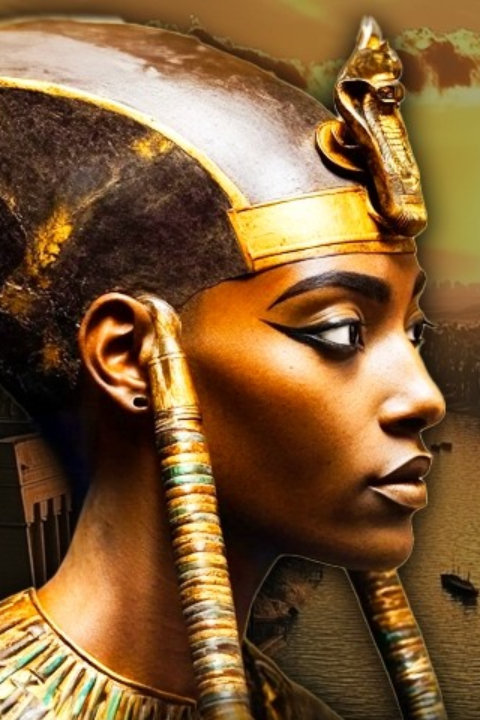
Abu Simbel is a pair of rock-cut temples in Nubia, in the far south of Egypt, carved for the pharaoh Ramesses II in the 13th century BCE and now standing on the west bank of Lake Nasser. The Great Temple, fronted by four seated colossi of the king, is aligned so that twice a year the rising sun reaches its innermost sanctuary. Between 1964 and 1968 both temples were cut into more than a thousand blocks and rebuilt on higher ground to save them from the waters of the Aswan High Dam.
Abu Simbel matters twice over. It is a 3,200-year-old statement of royal power on Egypt's southern frontier, and it is the best-known engineering rescue of the 20th century, the project that helped give the world the idea of shared World Heritage. The sun festival connects the two: an ancient alignment that modern engineers had to rebuild, deliberately, after the temples were moved.
What is Abu Simbel and who built it?
Abu Simbel was built by Ramesses II, the third king of the 19th Dynasty, who reigned from about 1279 to 1213 BCE. Work is usually dated from around 1264 BCE and is thought to have taken roughly two decades; sources differ on the exact year it was finished, so any completion date should be read as approximate. The builders were Ramesses II's own Egyptian workforce of quarrymen, sculptors and painters, the same royal workshops that produced his monuments at Thebes and elsewhere.
The site lies in Lower Nubia, a region Egypt controlled in the New Kingdom. Placing two enormous temples in its cliffs was an act of piety and also a message, carved at a scale no traveller could miss, that this stretch of the Nile belonged to Egypt and its king.
There are two temples. The Great Temple honours the state gods and the king himself; the Small Temple honours the goddess Hathor and Ramesses' chief queen, Nefertari. Both were cut directly into the sandstone cliff rather than built from quarried blocks.
What is inside the Great Temple?
The Great Temple's façade is about 33 m high and 38 m wide and is dominated by four seated colossi of Ramesses II, each about 20 to 21 m tall (UNESCO gives about 21 m). Smaller figures of members of the royal family, including Nefertari and several of the king's children, stand between and beside the king's legs. One colossus lost its upper body in antiquity, probably in an earthquake, and the fallen pieces still lie at its feet.
Inside, the temple runs straight back into the cliff through a sequence of halls to a small sanctuary. The great hall is lined with pillars carved as standing figures of the king in the form of Osiris. The temple is dedicated to Amun-Ra of Thebes, Ra-Horakhty of Heliopolis and Ptah of Memphis, the three great state gods of the period, and the deified Ramesses himself takes his place among them. For more on who these gods were, see the companion guide to the Egyptian gods and goddesses.
The Battle of Kadesh reliefs
Much of the wall decoration celebrates the Battle of Kadesh, fought against the Hittites in Syria around 1274 BCE, early in Ramesses' reign. The best-known scene shows the king alone in his chariot, drawing his bow against fleeing enemies. The battle seems to have ended without a decisive winner, but here it is presented as the king's personal triumph. The texts that frame these scenes are written in hieroglyphs, and the king's names appear in cartouches throughout; the guide to how Egyptian hieroglyphs work explains how to read them.
What is the Small Temple of Hathor and Nefertari?
The Small Temple, just north of the Great Temple, is dedicated to the goddess Hathor and to Queen Nefertari. Its façade carries six standing statues slightly over 10 m high: four of Ramesses II and two of Nefertari, each framed in its own recess.
What makes the façade unusual is scale. In Egyptian royal sculpture a queen was normally shown far smaller than the king, often no taller than his knee. Here Nefertari is carved at the same height as Ramesses, which is one of very few examples of its kind. Inside, the reliefs show the queen taking part in ritual alongside the king and in the presence of Hathor, a goddess of love, music and kingship who was also worshipped at Dendera. The companion article on Hathor and the Dendera Temple covers who she was and how her main cult centre worked.
How did Europeans rediscover Abu Simbel?
Abu Simbel was known locally but unknown to European scholars until March 1813, when the Swiss traveller Johann Ludwig Burckhardt saw the Small Temple and the top of the Great Temple's façade, which by then was almost buried in drifted sand. He described it in his Travels in Nubia, published after his death.
The Italian strongman-turned-explorer Giovanni Battista Belzoni first reached the site in 1816 but could not clear enough sand to enter. He returned the following year, and after some three weeks of digging his party entered the Great Temple on 1 August 1817. His Narrative (1820) gave Europe its first account of the interior.
What is the Abu Simbel sun festival?
The Abu Simbel sun festival is the twice-yearly event, on about 22 February and 22 October, when the rising sun shines straight along the axis of the Great Temple and lights the back wall of the inner sanctuary. Four seated statues sit there: Amun-Ra, Ra-Horakhty, the deified Ramesses and Ptah. On those mornings the light falls on three of them for a short time, reported at around 20 minutes, while Ptah, a god associated with the underworld, stays in shadow.
The alignment is deliberate. The builders oriented the temple's axis so that the sun at those points in its yearly path would reach all the way to the sanctuary, tying the king, seated among the gods, to the sun at dawn. The UNESCO World Heritage listing singles out this feature of the design.
Thousands of visitors gather in the dark before dawn on each festival morning. Egyptian press reports from October 2025 described about 4,000 people at the temple, with the light on the sanctuary lasting about 22 minutes.
The birthday and coronation claim
Tour guides often say the two dates mark Ramesses II's birthday and coronation. That is a modern tradition, not something stated in any ancient source. The dates themselves also drift: precession of the equinoxes slowly shifts such solar events over millennia, so the light did not necessarily enter the sanctuary on the same calendar days in Ramesses' time.
Why was Abu Simbel moved?
Abu Simbel was moved because the Aswan High Dam, begun in 1960, was about to create a vast reservoir, now Lake Nasser, that would have drowned the temples along with much of Nubia's archaeological heritage. Egypt and Sudan asked UNESCO for help, and on 8 March 1960 UNESCO launched the International Campaign to Save the Monuments of Nubia.
The campaign ran until 1980. By UNESCO's figures, 40 technical missions from five continents saved 22 monuments and complexes, at a total cost of about US$80 million, roughly half of it given by some 50 countries. Abu Simbel was the largest single operation; Philae, the temple island near Aswan, was moved to Agilkia island between 1972 and 1979. Several smaller temples were given to countries that had helped, including the Temple of Dendur, now in New York, and the Temple of Debod in Madrid.
How the temples were cut and rebuilt
The scheme chosen was to cut the temples into blocks and reassemble them on the plateau above. Work on a temporary cofferdam to hold back the rising water began in November 1963. The rock behind the carved surfaces was removed, and the temples were sawn into 1,036 blocks (counts of about 1,040 also appear), most weighing up to 20 to 30 tonnes. The first block was lifted on 21 May 1965 and the last removed on 16 April 1966.
The temples were rebuilt against a reinforced-concrete dome covered with rock fill to recreate the original cliff, about 65 m higher than the old site and roughly 180 to 210 m back from it; UNESCO gives 64 m higher and 180 m inland. The Abu Simbel operation cost about US$40 million, with some accounts giving around $41.7 million. The relocated temples were formally inaugurated on 22 September 1968.
Does the sun alignment still work after the move?
Yes. The engineers set the rebuilt temple's orientation to reproduce the original solar alignment within a tight tolerance, and the sanctuary is still lit at the new site every year. The often-repeated claim that the move shifted the event by exactly one day is not supported by the engineering sources.
The rescue had a legacy beyond Egypt. UNESCO credits the Nubia campaign with helping inspire the 1972 World Heritage Convention, and in 1979 the "Nubian Monuments from Abu Simbel to Philae" were inscribed on the World Heritage List.
How do people visit Abu Simbel today?
Most visitors reach Abu Simbel from Aswan, by road across the desert or on a short flight. The site has very little shade, a point 4biddenknowledge's own Egypt travel guide makes when advising travellers to plan for the sun. For the temples of Thebes that usually come before or after Abu Simbel on an itinerary, see Luxor explained, which covers Karnak, Luxor Temple, the Valley of the Kings and Hatshepsut's temple.
Ramesses II's reach went well beyond Nubia. Material from his reign turns up across the eastern Mediterranean, including the sealed burial cave found at Palmahim Beach south of Tel Aviv, covered in a 3,300-year-old cave from the reign of Ramesses II discovered in Israel.
Billy Carson's reading
Billy Carson's interest in Abu Simbel comes from the same place as his wider work on Egypt: the question of how much the ancient Egyptians knew about the sky and why they built that knowledge into stone. His official YouTube channel carries a livestream titled "The Abu Simbel Temple Alignment", embedded with this article, tied to his Sacred Egypt tour. The questions he raises are the ones the temple invites: how a workforce without modern instruments fixed an axis that delivers the dawn sun to a specific statue on specific days, and what the builders meant by lighting the king and two solar gods while leaving Ptah in darkness.
Carson treats these as open questions about intent and knowledge rather than settled answers, part of a larger inquiry into Egyptian sacred science that he pursues on 4BK TV and on his group tours to Egypt. The mainstream record set out above is the foundation those questions start from.
Watch, read and go deeper
Start with Billy Carson's livestream on the Abu Simbel alignment, then follow his wider exploration of Egyptian temples and symbolism in Egyptian Mystery School on 4BK TV. The companion guides to Luxor and to Hathor and Dendera cover the other temples most visitors see on the same journey. The Ancient Egypt topic hub gathers every related article, from the gods to the hieroglyphic script.
Frequently asked questions
Who built Abu Simbel and when?
Abu Simbel was built for Ramesses II of the 19th Dynasty, who reigned from about 1279 to 1213 BCE. Work is usually dated from around 1264 BCE and took roughly two decades. It was carved by the king's Egyptian workforce of quarrymen and sculptors directly into the sandstone cliff.
When is the Abu Simbel sun festival?
The sun festival takes place twice a year, on about 22 February and 22 October. At sunrise the light travels along the Great Temple's axis and lights the statues of Amun-Ra, Ra-Horakhty and Ramesses II in the sanctuary for around 20 minutes. The statue of Ptah stays in shadow.
Were the dates Ramesses II's birthday and coronation?
That is a popular modern tradition with no support in any ancient source. Egyptologists treat it as unproven. The festival dates are best understood as the days on which the sun currently lines up with the temple's axis.
How was Abu Simbel moved?
Between 1964 and 1968 the temples were sawn into 1,036 blocks, mostly up to 20 to 30 tonnes each, and rebuilt against an artificial hill about 65 m higher and roughly 180 to 210 m back from the original site. The work was part of UNESCO's International Campaign to Save the Monuments of Nubia, launched in 1960 because of the Aswan High Dam. The relocated temples were inaugurated on 22 September 1968.
How tall are the statues at Abu Simbel?
The four seated colossi of Ramesses II on the Great Temple façade are each about 20 to 21 m tall, on a façade about 33 m high and 38 m wide. The six standing statues on the Small Temple façade are slightly over 10 m high. Nefertari is shown at the same height as the king there, which is unusual in Egyptian art.
Sources and further reading
- UNESCO World Heritage Centre, "Nubian Monuments from Abu Simbel to Philae" (World Heritage List entry 88, inscribed 1979)
- UNESCO World Heritage Centre, records of the International Campaign to Save the Monuments of Nubia (1960–1980)
- Johann Ludwig Burckhardt, Travels in Nubia (1819)
- Giovanni Battista Belzoni, Narrative of the Operations and Recent Discoveries within the Pyramids, Temples, Tombs, and Excavations, in Egypt and Nubia (1820)
- K. A. Kitchen, Pharaoh Triumphant: The Life and Times of Ramesses II (Aris & Phillips, 1982)
- Richard H. Wilkinson, The Complete Temples of Ancient Egypt (Thames & Hudson, 2000)