For decades, scientists searching the cosmos for life have followed a simple assumption: alien life will resemble the chemistry of life on Earth.
But what if that assumption is wrong?
A growing group of researchers believe the real key to detecting extraterrestrial life may not lie in finding familiar molecules like oxygen or methane—but in identifying unusual patterns in how carbon molecules behave and react with each other. In other words, alien life might reveal itself not through what it is made of, but through how its chemistry moves, transforms, and interacts.
And that shift in thinking could completely change the way we search the universe.
Why Traditional Biosignatures Might Miss Alien Life
Most current methods for detecting life on other planets rely on identifying biosignatures—chemical fingerprints associated with life on Earth. Scientists often look for gases like:
Oxygen
Methane
Nitrous oxide
When these gases appear together in an atmosphere, they can signal biological activity because life constantly replenishes them.
But here’s the cosmic twist.
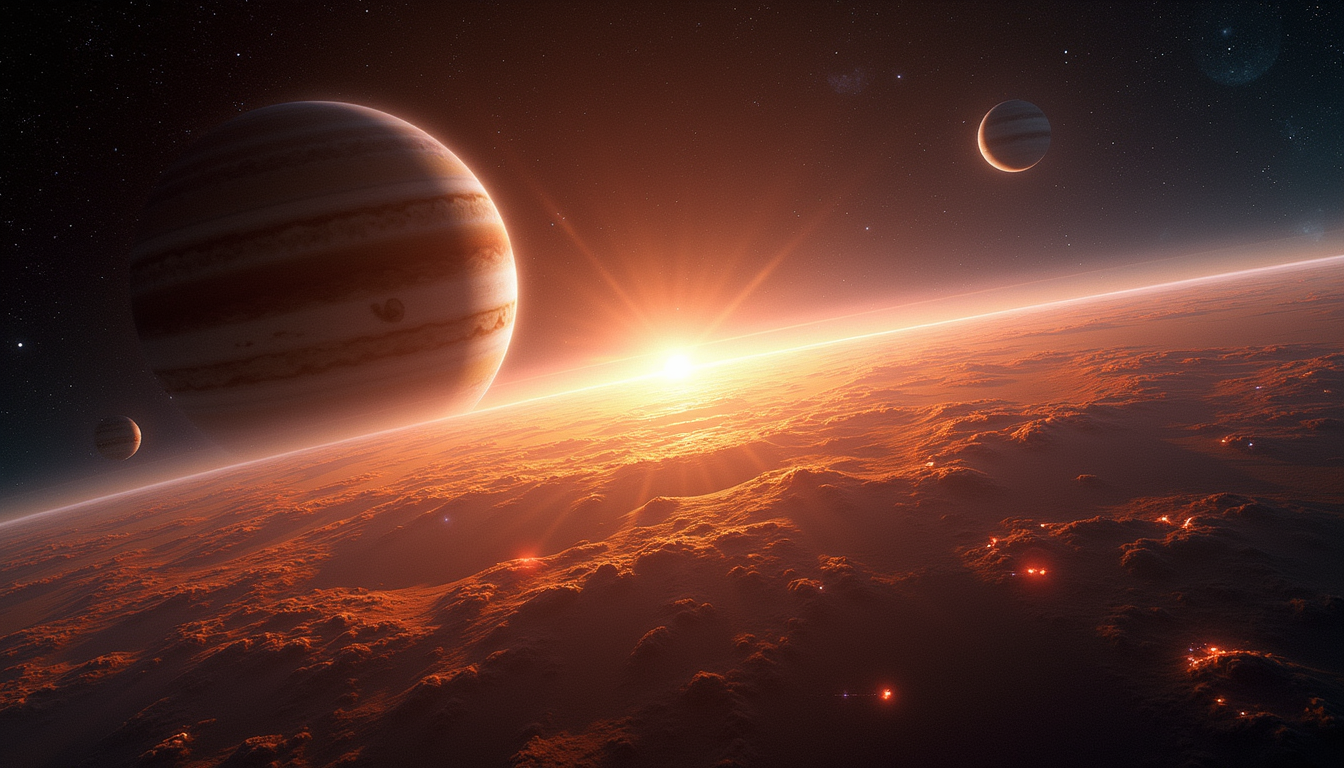
These markers are Earth-centric. They reflect how life evolved on our planet, under our atmosphere, oceans, and sunlight. On another world—perhaps orbiting a red dwarf star or hidden beneath an icy crust—life could operate under entirely different chemical rules.
That means a living alien ecosystem might produce no recognizable Earth-like biosignatures at all.
A New Approach: Watching Carbon Chemistry in Action
Instead of looking for familiar molecules, some researchers propose studying the reactivity of carbon compounds in a planet’s environment.
Carbon is an incredibly versatile element. On Earth, it forms the backbone of proteins, DNA, sugars, and countless organic molecules. But its true superpower is how easily it can form, break, and rearrange bonds with other elements.
Life exploits this flexibility.
Scientists believe that if a planet hosts life—even life radically different from Earth’s—the chemistry of carbon compounds there may behave in ways that are statistically unusual compared to non-living environments.
Think of it like reading a dance floor from across the room.
Even if you can’t hear the music, you can tell a party is happening because the crowd moves in organized patterns. Similarly, living systems may create chemical patterns that don’t occur naturally without biological processes.
Detecting the “Chemical Rhythm” of Life
The idea centers on identifying chemical systems that are far from equilibrium.
In non-living environments, chemical reactions usually settle into stable states. But life constantly pushes chemistry out of balance. Organisms absorb energy, build molecules, and break them apart in complex networks of reactions.
This produces chemical environments where:
Certain molecules appear in unexpected concentrations
Reaction networks are unusually complex
Carbon compounds show distinctive patterns of reactivity
If telescopes or planetary probes detect such patterns, scientists could interpret them as evidence of active chemistry consistent with life.
Even if that life is nothing like anything on Earth.
Why This Matters for Future Space Missions
Next-generation telescopes are already gearing up to analyze the atmospheres of distant worlds.
Projects studying exoplanets—planets orbiting stars outside our solar system—can detect traces of atmospheric molecules by analyzing how starlight filters through those atmospheres. Instruments can identify chemical fingerprints billions of miles away.
If scientists incorporate reactivity-based biosignatures into their analysis, they could dramatically expand the range of planets considered potentially habitable.
Instead of asking:
“Does this world look like Earth?”
Researchers could ask a deeper question:
“Does the chemistry here behave like something alive?”
Alien Life May Not Look Like Life at All
The universe is vast—containing hundreds of billions of galaxies, each packed with billions of stars. Statistically speaking, the odds that life exists elsewhere are compelling.
But that life may not resemble plants, animals, microbes, or anything recognizable to us.
It might exist as exotic biochemical systems in methane seas, beneath frozen crusts, or within mineral-rich atmospheres. Its molecules might organize in ways that defy our expectations.
Which is why the search for extraterrestrial life is slowly evolving from looking for Earth’s reflection to recognizing the universal fingerprints of living chemistry itself.
A Universe Waiting to Be Understood
Every time scientists rethink the rules of biology, the universe becomes a little more mysterious—and a little more promising.
Somewhere out there, chemistry may already be dancing in ways we’ve never seen before.
The question is no longer just “Are we alone?”
It may soon become:
“Are we ready to recognize life when it looks nothing like us?”