Scientists have discovered something surprisingly familiar floating in deep space: sugar.
For the first time, researchers have detected a true sugar molecule in interstellar space, adding another fascinating piece to the puzzle of how the ingredients necessary for life may have reached early Earth.
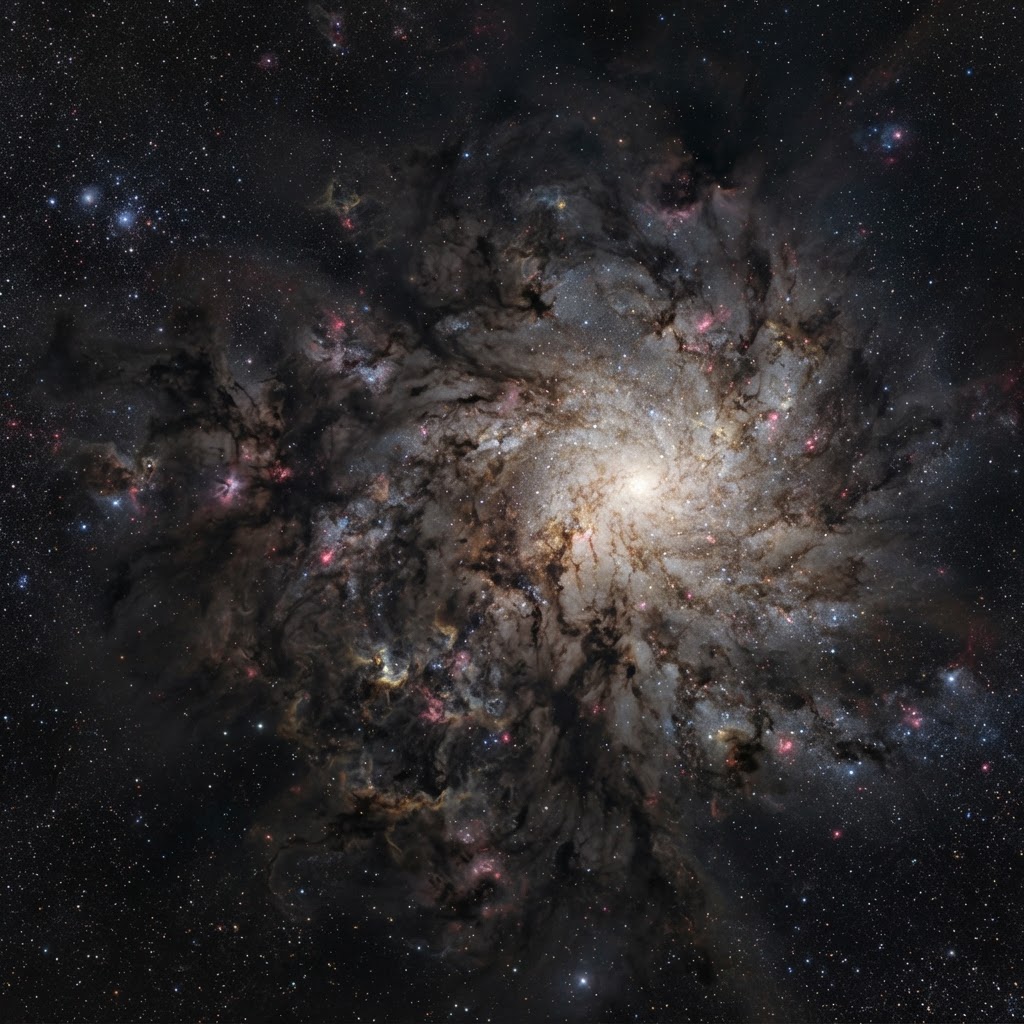
The molecule, called erythrulose, is a four-carbon sugar naturally found in foods such as raspberries. Researchers detected it inside the molecular cloud G+0.693-0.027, located near the center of the Milky Way, roughly 27,000 light-years from Earth.
The discovery was reported in Nature Astronomy by an international research team led by astrophysicist Izaskun Jiménez-Serra of Spain's Center for Astrobiology.
And while scientists haven't found cosmic raspberries, what they have found could tell us something important about our own origins.
Why Finding Sugar in Space Matters
Sugars aren't just something we add to food. They play essential roles in biology.
→ Sugars provide and store energy.
→ They contribute to cellular structures.
→ Certain sugars are essential components of genetic molecules.
One important example is ribose, the sugar found in RNA.
Scientists studying the origins of life have therefore wondered whether some of the sugars needed for early biological chemistry could have arrived on Earth from space.
This new discovery strengthens that possibility.
How Did Scientists Find It?
Astronomers identified erythrulose by studying the radio signals coming from the molecular cloud.
Every molecule has a distinctive spectral fingerprint. Researchers can compare signals detected in space with laboratory measurements to determine which molecules are present.
The team identified 12 sets of molecular transitions associated with erythrulose, providing strong evidence of its presence.
Even more surprising was its abundance. Erythrulose appeared more abundant than some simpler three-carbon sugars researchers expected to find.
That suggests chemical complexity in space may not always develop through the simple step-by-step processes scientists previously imagined.
Could Earth's Ingredients for Life Have Come From Space?
This isn't the first evidence connecting sugars with extraterrestrial material.
Scientists have previously discovered biologically important sugars in meteorites, and samples returned from asteroid Bennu by NASA's OSIRIS-REx mission have provided further evidence that complex organic chemistry can exist inside asteroids.
That raises an intriguing possibility:
Some of the ingredients eventually used by life on Earth may have formed before Earth itself existed.
A possible journey could look something like this:
Interstellar molecular cloud
↓
Organic molecules form on cosmic dust
↓
Stars and planetary systems develop
↓
Molecules become incorporated into asteroids and comets
↓
Asteroids deliver organic material to young planets
Scientists aren't claiming this is exactly how life began. Instead, discoveries like erythrulose demonstrate that space can naturally produce surprisingly complex chemistry.
Space Dust May Be More Important Than It Looks
Researchers believe erythrulose may form through chemical reactions occurring on the surfaces of tiny interstellar dust grains.
Rather than simply drifting through space, these grains can act as microscopic environments where molecules meet and react.
In a sense, interstellar clouds may contain countless tiny chemical laboratories.
That could explain how increasingly complicated organic molecules develop long before planets are ready to support life.
This Is Not Evidence of Alien Life
Finding sugar in space doesn't mean scientists discovered extraterrestrial organisms.
What they discovered is arguably more fundamental: chemistry associated with life can develop naturally outside planets.
The universe has already been shown to contain numerous organic molecules and potential prebiotic compounds.
Now sugar can officially be added to that growing list.
What Comes Next?
One major question is whether astronomers can find even more biologically important sugars in interstellar space.
Ribose would be particularly significant because it is an essential component of RNA and plays a central role in theories about the earliest forms of life.
Scientists will also want to determine whether erythrulose is unusual or whether sugars are widespread throughout molecular clouds in our galaxy.
If they are common, the question becomes even more interesting:
How many developing planets receive the same chemical ingredients that early Earth did?
The discovery doesn't tell us where life exists elsewhere in the universe.
But it does suggest that some of life's building blocks may begin their journey long before planets, oceans or living organisms ever appear.
Sometimes the chemistry that eventually becomes life may begin among the stars.