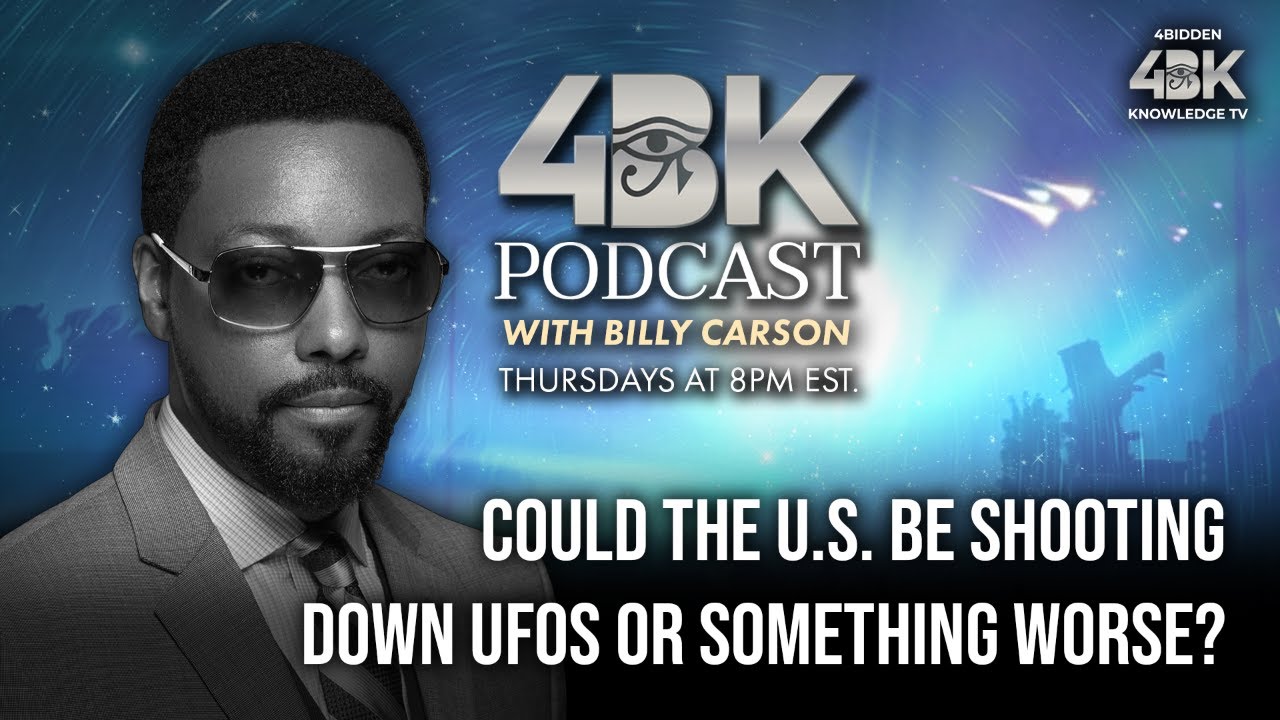
Roswell refers to events in New Mexico in July 1947, when debris from a ranch near Corona was collected by the Army Air Forces base at Roswell and announced to the press as a captured "flying disc," then re-identified the same day as a weather balloon with a radar target. The US Air Force concluded in 1994 that the material came from Project Mogul, a classified balloon program built to listen for Soviet nuclear tests. Many researchers, Billy Carson among them, maintain that the balloon story was a cover for the recovery of a non-human craft.
Why does it matter? Roswell is the case that turned UFOs into a story about government secrecy. A press release retracted within hours set a pattern that still shapes the debate: an official explanation, a later admission that the first account was incomplete, and a public left to decide which version to trust. Knowing what the documents show, and where they run out, is the starting point for judging every crash-retrieval claim since, including those heard before Congress.
Watch the video
What happened at Roswell in July 1947?
In the summer of 1947, a rancher named W. W. "Mac" Brazel found a field of debris on the Foster Ranch, about 75 miles northwest of Roswell. In an interview printed in the Roswell Daily Record on July 9, 1947, Brazel said he and his eight-year-old son Vernon first came across it on June 14, about seven or eight miles from the ranch house. He described "rubber strips, tinfoil, a rather tough paper and sticks," and said he went back with his family on July 4 to gather it up. Later retellings moved the discovery into early July.
Around July 6 or 7, Brazel drove into town and told Sheriff George Wilcox that he might have found one of the "flying disks" then in the news. Wilcox contacted Roswell Army Air Field, home of the 509th Bomb Group. Major Jesse Marcel, the group's intelligence officer, and Captain Sheridan Cavitt went out to the ranch and brought material back.
On July 8, the base's public information officer, Walter Haut, issued a statement that the intelligence office of the 509th had been "fortunate enough to gain possession of a disc." The Roswell Daily Record ran it on the front page that day under the headline "RAAF Captures Flying Saucer On Ranch in Roswell Region," and the wire services carried it around the world.
How did "flying disc" become "weather balloon" in a single day?
The correction came out of Fort Worth the same day. The base commander, Colonel William Blanchard, had notified Brigadier General Roger Ramey, commander of the Eighth Air Force, and the debris was flown to Fort Worth Army Air Field. There, Ramey, Colonel Thomas DuBose and weather officer Irving Newton presented it to the press as a weather balloon and its radar target. Newton identified it as "a balloon and a RAWIN target," a foil reflector used to track balloons by radar.
Fort Worth Star-Telegram photographer J. Bond Johnson took the best-known pictures, and newspapers nationwide ran an image of Marcel posing with the debris. The Star-Telegram's photographs are now held at the University of Texas at Arlington Library. An FBI teletype dated July 8, 1947, recorded that the military had reported recovering "an object resembling a high-altitude weather balloon with a radar reflector."
One photograph became a case in itself. In it, Ramey holds a sheet of paper now called the Ramey memo. Some analysts argue enlargements show the words "victims of the wreck," which would not fit a balloon; others read different words or none. No reading has reached agreement, and near-illegible text invites people to see what they expect.
Why did the case go quiet for 30 years, and how did it come back?
For three decades Roswell was a footnote, with the balloon explanation accepted. That changed in 1978, when nuclear physicist and UFO researcher Stanton Friedman interviewed Jesse Marcel, then retired. Marcel said the material he had handled was not from a weather balloon and that the balloon story had been a cover.
In 1980, Charles Berlitz and William L. Moore published The Roswell Incident, which built Marcel's account into a full crash-retrieval narrative. The book also introduced alien bodies, through the second-hand story of the late civil engineer Grady "Barney" Barnett, who was said to have seen a craft and bodies on the Plains of San Agustin. That is the root of the idea of more than one crash site.
In 1989, Roswell mortician Glenn Dennis said the base had called him about caskets and preserving bodies, and that a nurse had described an autopsy. Investigators found no record of the nurse, and Dennis admitted he had made up her name, then a second name too.
The "alien autopsy" film is a separate story. Footage promoted by producer Ray Santilli aired on Fox on August 28, 1995, as an autopsy of a Roswell body. In April 2006, Santilli and Gary Shoefield admitted they had staged it, with bodies made by sculptor John Humphreys, though Santilli still claimed it recreated genuine footage he had lost.
What was Project Mogul?
Project Mogul was a classified Army Air Forces program, run in 1947 through a New York University balloon project, that tried to detect Soviet atomic tests with microphones carried on high-altitude balloons. The idea came from geophysicist Maurice Ewing, who proposed that sound from a distant explosion would travel along a channel in the upper atmosphere. Albert Crary led the field team at Alamogordo Army Air Field, with Charles B. Moore as project engineer.
The Air Force connected Mogul to Roswell in a report dated July 1994, signed by Colonel Richard L. Weaver and prepared after New Mexico congressman Steven Schiff asked the General Accounting Office to search for records. It concluded that the debris most likely came from NYU Flight 4, launched on June 4, 1947: a train of balloons carrying radar reflectors and a cylindrical metal sonobuoy. Crary's diary showed the flight was launched but never recovered by the NYU group. The reflectors were built from foil or foil-backed paper, balsa beams, tape, nylon twine and brass eyelets, some with purplish-pink tape printed with symbols, a detail that matters because witnesses later described strange markings on the sticks.
The report found "absolutely no evidence of any kind that a spaceship crashed near Roswell or that any alien occupants were recovered therefrom." It was followed in 1995 by The Roswell Report: Fact vs. Fiction in the New Mexico Desert, which published the supporting documents.
Congress's own investigators added an awkward finding. The General Accounting Office report of July 28, 1995, found that the base's administrative records from March 1945 to December 1949, and its outgoing messages from October 1946 to December 1949, had been destroyed. The only 1947 documents it located were a base history recording a "flying disc" later identified as a radar-tracking balloon, and the FBI teletype.
Critics of the Mogul answer press on Flight 4 itself. Its records are thin, and readings of Crary's field notes leave room to argue the June 4 launch was cancelled or changed, so exactly which balloon train produced the debris is still disputed. Defenders reply that the materials match.
What did the 1997 "Case Closed" report say about the bodies?
The Air Force's 1997 report, The Roswell Report: Case Closed by Captain James McAndrew, addressed the stories of alien bodies that the Mogul explanation did not cover. It argued that witnesses were remembering real but later Air Force activity. Between June 1954 and February 1959, 43 high-altitude balloon flights carrying 67 anthropomorphic test dummies were launched and recovered across New Mexico in programs such as High Dive and Excelsior. It also pointed to a 1956 KC-97 crash that killed eleven airmen and a 1959 balloon mishap that injured two pilots.
The report's argument was that events spread over many years had been "consolidated" in memory into two or three days in July 1947. Critics seized on the obvious problem: the dummies were dropped seven to twelve years after Roswell, so the explanation asks readers to accept that several witnesses misplaced their memories by a decade. For believers, Case Closed did more to keep the case open than to close it.
Where does the official record stand now?
The most recent government word came from the Pentagon's All-domain Anomaly Resolution Office (AARO), whose Report on the Historical Record of U.S. Government Involvement with Unidentified Anomalous Phenomena, Volume 1, was released in March 2024. Its Roswell section reviews the Air Force findings of the 1990s and restates them: the materials were consistent with a Project Mogul balloon, the reported bodies were test dummies, and no records showed that the government recovered aliens or extraterrestrial material.
Roswell also has to be read in its moment. Kenneth Arnold's sighting of nine fast objects near Mount Rainier on June 24, 1947, had set off a national wave of "flying saucer" reports, which is why Brazel thought of a disc at all. At the end of 1947 the Air Force opened Project Sign, at General Nathan Twining's request, followed by Project Grudge and Project Blue Book, which ran from March 1952 to December 17, 1969, and logged 12,618 reports, 701 left unexplained.
Why has the Roswell case never died?
The case survives because both sides can point to something real. The government's first statement was wrong, its second was incomplete because Mogul was classified, and key base records were destroyed. The detailed explanations came decades later and only under pressure. To believers, that is the pattern of a cover-up. To skeptics, the witness accounts surfaced thirty or more years on, grew with each retelling, and include an admitted fabrication and an admitted hoax film.
Roswell also became a template. Britain's version, the Rendlesham Forest incident, turned on a military base, witness memory and official files, and the Phoenix Lights of March 1997 showed how a contested explanation keeps a case alive. The modern version is the crash-retrieval testimony traced in the UAP hearings explained.
The town has embraced the legend. The International UFO Museum and Research Center, founded by Glenn Dennis with Walter Haut and Max Littell, opened in September 1991 in a former 1930s movie theater on North Main Street and anchors Roswell's annual UFO Festival each summer.
Billy Carson's reading
Billy Carson holds that Roswell was a real crash retrieval. In his breakdown of UAPs versus UFOs and the Disclosure Project testimony, Carson says there were two crashes roughly 50 miles apart, that both debris and bodies were recovered, and that the weather-balloon explanation was a cover story. He sets that beside David Grusch's 2023 testimony to Congress about non-human craft and remains, and returns to the case in his Roswell live stream.
Carson also answers the most common objection, that advanced visitors should not crash. Space travel, he argues, is dangerous for anyone, and his specific theory is that a scalar radar system, which he traces to the work of Nikola Tesla, could disrupt a craft's navigation and was used to bring vehicles down, including at Roswell. In his view, recovered craft were reverse engineered into what he calls alien reproduction vehicles, a thread that connects to the secret space program, real classified projects versus the conspiracy claims.
Read fairly, his position and the Mogul documentation agree on one point: the 1947 balloon announcement was not the full story. They part on what was hidden. The Air Force says a classified acoustic-detection program; Carson argues a non-human craft, with Mogul as a second layer of cover. The surviving documents support the first; Carson's reading rests on witness testimony and on the gaps in the record.
Watch, read and go deeper
For the Cold War cases in depth, 4BK TV carries Richard Dolan's UFO Chronicles, a series from the UFO historian Richard Dolan. For how the crash-retrieval story reached Congress, read the UAP hearings explained. The Anunnaki topic hub connects the modern UFO debate to Carson's research on ancient contact.
Frequently asked questions
What actually crashed at Roswell in 1947?
The US Air Force's 1994 report concluded the debris came from a Project Mogul balloon train, most likely NYU Flight 4, launched June 4, 1947, with radar reflectors and acoustic equipment. Researchers who reject that answer argue a non-human craft was recovered.
Why did the Army say it found a flying disc?
On July 8, 1947, the Roswell base's information office announced the 509th Bomb Group had recovered a "disc." The same day in Fort Worth, General Roger Ramey's staff identified it as a weather balloon and radar target. Why the base said disc at all remains a central question.
Was the alien autopsy film real?
No. It aired on Fox in August 1995, and in April 2006 producers Ray Santilli and Gary Shoefield admitted staging it with sculpted bodies. Santilli claimed it recreated lost genuine footage, which has never been produced.
What is the Ramey memo?
It is a sheet of paper visible in General Roger Ramey's hand in a July 8, 1947 press photograph taken in Fort Worth. Some analysts read the phrase "victims of the wreck" in enlargements, while others read different words or none. There is no agreed reading.
What does Billy Carson believe about Roswell?
Billy Carson argues that there were two crashes roughly 50 miles apart, that debris and bodies were recovered, and that the weather-balloon story was a cover. He links the recoveries to later reverse-engineering programs, presenting this as his reading alongside the official Mogul explanation.
Sources and further reading
- Roswell Daily Record, July 8 and July 9, 1947
- Richard L. Weaver, Report of Air Force Research Regarding the "Roswell Incident" (US Air Force, July 1994)
- US General Accounting Office, Results of a Search for Records Concerning the 1947 Crash Near Roswell, New Mexico (GAO/NSIAD-95-187, July 1995)
- The Roswell Report: Fact vs. Fiction in the New Mexico Desert (US Air Force, 1995)
- James McAndrew, The Roswell Report: Case Closed (US Air Force, 1997)
- All-domain Anomaly Resolution Office, Report on the Historical Record of U.S. Government Involvement with Unidentified Anomalous Phenomena, Volume 1 (2024)
- Charles Berlitz and William L. Moore, The Roswell Incident (1980)