Plato's Atlantis comes from two dialogues, the Timaeus and the Critias, in which an Egyptian priest at Sais tells the Athenian statesman Solon that a great island power beyond the Pillars of Heracles sank “in a single day and a night of misfortune” some 9,000 years before Solon's time. In this live stream, Billy Carson and Matthew LaCroix, co-authors of The Epic of Humanity, read those passages from their book and argue that Plato preserved a real memory of a civilization lost at the end of the last Ice Age, which LaCroix ties to the Younger Dryas.
It matters because Plato is the only ancient author who tells the Atlantis story by name, and every later theory goes back to these two texts. Few people have read them, and the stream works through them page by page, a guided reading for fans and skeptics alike.
What the video covers
Most of the historical narration is LaCroix's. Timestamps are approximate.
How the story reached Plato (from about 3 min)
LaCroix starts with Solon travelling to Egypt in the early 6th century BCE and meeting the priests of the temple at Sais in the Nile Delta, whom he describes as record keepers. He calls the senior priest Sonchis, a name that comes from Plutarch's Life of Solon; Plato's priest is unnamed. LaCroix also says Solon passed the account to Socrates, but Plato gives a different chain: Solon told his relative Dropides, who told his son Critias the elder, who told his grandson Critias, the speaker in the dialogues. LaCroix's view that Plato framed a true story as allegory to stay safe after Socrates' execution in 399 BCE is his own interpretation.
Fire, water and a real ocean (from about 8 min)
The hosts read the priest's words that there have been “many destructions of mankind,” the greatest “by fire and water,” and that beyond a harbour with a narrow entrance lies “a real ocean” and a true continent, where a confederation of kings ruled Atlantis, other islands and parts of the continent. LaCroix reads the narrow mouth as the Strait of Gibraltar. He converts Plato's 9,000 years before Solon to about 11,600 years ago and links it to the end of the Younger Dryas cold period, which Greenland ice cores place close to that date. He also matches it to Meltwater Pulse 1A, but that sea-level rise is dated to roughly 14,500 years ago, so that match does not hold.
The Azores and a global Atlantis (from about 12 min)
LaCroix, drawing on his conversations with Randall Carlson, points to the Azores, where three tectonic plates meet, and suggests the islands are the volcanic peaks of a sunken landmass, framing it as a question rather than an answer. He ties it to the Timaeus lines that the island vanished after earthquakes and floods and left a shoal of mud that made the sea impassable. Carson's addition is that the ring city Plato describes was the capital, but that Atlantis “had spread out and became a global civilization,” the way a kingdom extends beyond the king's court.
The so-called Tibetan map (from about 16 min)
LaCroix shows a map from the book that he attributes to Aurel Stein's 1907 finds, with Atlantis stretching from North Africa to the Yucatán and a submerged Lemuria, or Mu, in the Pacific. Stein's 1907 haul came from the Library Cave at the Mogao Caves near Dunhuang in western China, not Tibet, though it included Tibetan manuscripts. No map of Atlantis or Mu is catalogued among Stein's finds, and LaCroix says what he shows is a later copy, so it is best treated as unverified. The guide to Lemuria and Mu traces where that Pacific idea came from.
The sonar city off Cuba (from about 21 min)
LaCroix recounts the 2001 side-scan sonar survey off western Cuba by Paulina Zelitsky and Paul Weinzweig, which recorded geometric shapes on a flat seabed, and a follow-up dive with the Cuban geologist Manuel Iturralde, who remarked that if artificial, their depth implied an age of around 50,000 years. The structures have never been confirmed by a later expedition or a peer-reviewed survey.
One blueprint (from about 25 min)
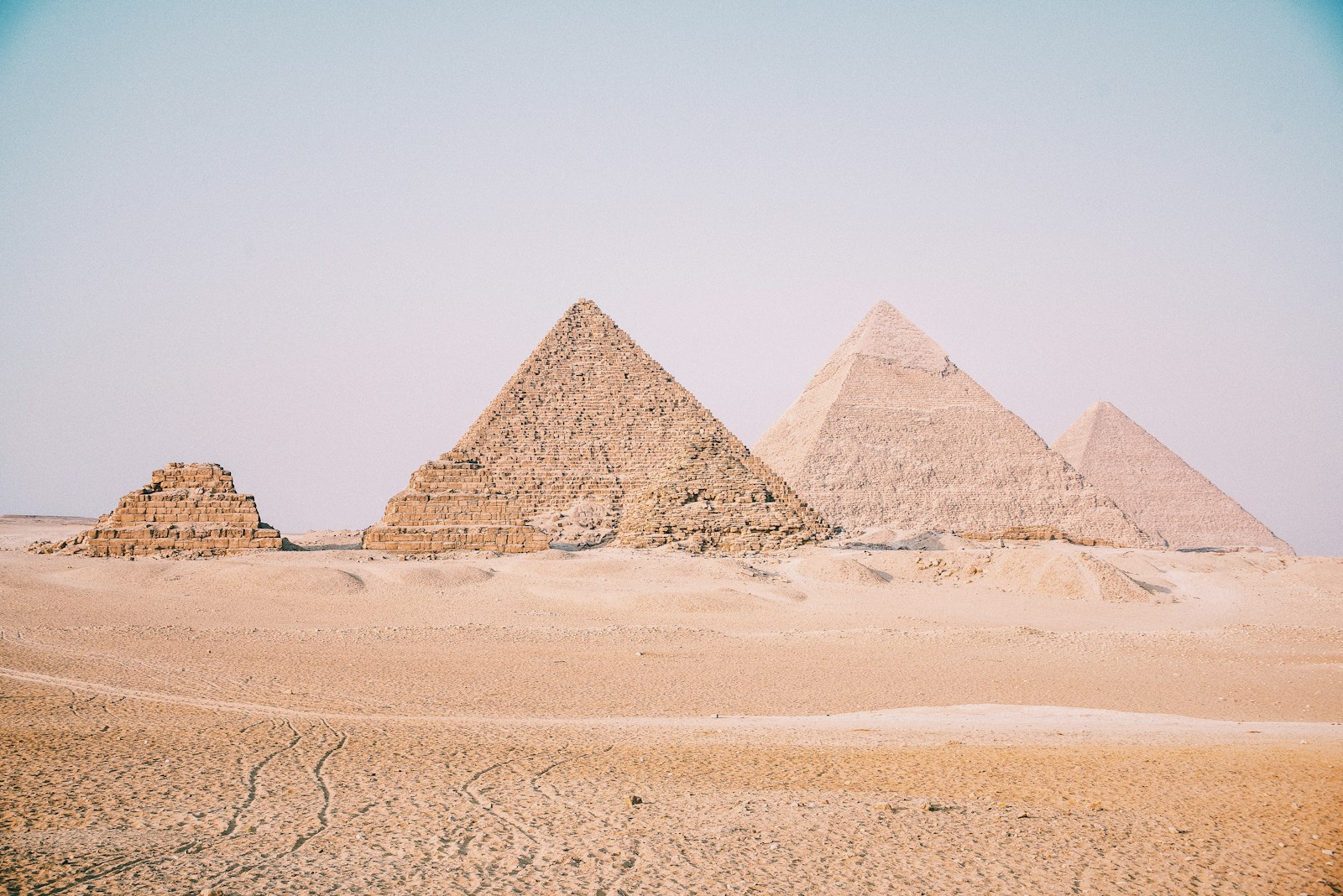
Carson argues that pyramids around the world share a design: the base of the Pyramid of the Sun at Teotihuacan is close to that of the Great Pyramid at Giza, and its height about half. He reads this as the work of “one master architect or maybe a small group of master architects.” The figures are approximate: bases of roughly 225 and 230 meters a side, and heights of about 65 to 70 meters against the Great Pyramid's original 146.
Diodorus and the kings (from about 27 min)
Carson reads a passage the book attributes to Diodorus describing an island “of considerable size” a number of days' voyage to the west. LaCroix calls Diodorus a companion of Socrates; Diodorus Siculus in fact wrote in the 1st century BCE, about three centuries after Plato, so he is not independent testimony from Socrates' circle.
Donnelly, Menorca and Edfu (from about 32 min)
LaCroix turns to Ignatius Donnelly, the Minnesota congressman whose 1882 book Atlantis: The Antediluvian World popularized the modern Atlantis idea, and to the T-shaped taulas of Menorca, which he compares with the pillars of Göbekli Tepe. He puts them at up to 30 feet; the largest are about 4 meters (roughly 13 feet). At the Temple of Horus at Edfu, he says, wall texts describe Zep Tepi, the First Time, and a primeval island of the gods that was destroyed. Carson links this to a flood in Egypt's distant past and to Thoth helping rebuild civilization afterward.
Frozen trees and mammoths (from about 40 min)
LaCroix tells the story of Eduard Toll, who explored the New Siberian Islands and vanished in 1902, and of a frozen alder with green leaves found far north of today's tree line. He links it to mammoth remains in Siberia and Alaska, to Randall Carlson's estimate of tens of millions of megafauna deaths, and to a warming spike in the Greenland ice cores around 14,500 years ago followed by a plunge. His figure of minus 150 degrees for the cold required has no stated source; the coldest natural temperature recorded on Earth is about minus 128.6 °F, at Vostok Station in 1983.
Yugas, the Sphinx and a longer timeline (from about 52 min)
LaCroix brings in the Yuga cycles of Indian tradition, a golden age followed by collapse, and says he does not expect the present age to end in another reset. Carson points to the weathering in the Sphinx enclosure as evidence of long exposure to water from Younger Dryas flooding. LaCroix adds the history: John Anthony West's argument for water erosion, the geologist Robert Schoch's presentations in 1991 and 1992, and the dating of Göbekli Tepe's oldest layers to about 11,600 years ago. The pillar on how old the Sphinx is covers that debate in full.
Key takeaways
- Plato's Atlantis account sits in the Timaeus and the Critias, told as a story an Egyptian priest at Sais gave Solon.
- In Plato the chain runs Solon, Dropides, Critias the elder, Critias; the priest's name Sonchis comes from Plutarch.
- Plato's date of 9,000 years before Solon lands near the end of the Younger Dryas, the link LaCroix builds on.
- Carson holds that Atlantis was a global civilization with a ring-city capital, not a single island.
- The “Tibetan” map and the Cuban sonar city shown on the stream remain unverified.
Billy Carson's reading
Carson's starting point is that there is “enough circumstantial evidence to prove that it was real and it really did exist.” He reads Plato's account as history wrapped in philosophy and sees the same design signature in monuments on several continents. For him, Atlantis was the leading centre of a worldwide civilization, which is why he expects related remains in the Atlantic, the Caribbean and Egypt alike. The fuller case, including his Anunnaki connection, is in the Atlantis pillar guide.
He also treats the story as a lesson. “The past is prologue,” he says, and humanity appears to be in a “loop of rise and fall,” repeating the same patterns of economics, distraction and war. Knowing that history, in his view, is how a civilization avoids repeating it. His reading of Thoth as a rebuilder draws on his work on the Emerald Tablets; that book and The Epic of Humanity are on the books page.
What mainstream scholarship says
Classicists generally read Atlantis as a story Plato composed for the dialogues: an idealized early Athens, modelled on the state of the Republic, defeats an arrogant naval empire that is then destroyed. No source before Plato mentions Atlantis. Scholars such as Pierre Vidal-Naquet and Christopher Gill treat the 9,000-year date as part of that literary design.
Geologists see no sunken continent in the mid-Atlantic: the Azores sit on young oceanic crust built by volcanism at the Mid-Atlantic Ridge and the Azores hotspot. The Younger Dryas is well documented, but the idea that a cosmic impact triggered it is disputed. Frozen mammoths date across tens of thousands of years and typically show ordinary deaths such as miring or drowning, not a single flash freeze. Most Egyptologists date the Sphinx to Khafre's reign, around 2500 BCE, and attribute the enclosure's weathering to salt crystallization and rainfall in that era.
Watch, read and go deeper
Start with the Atlantis pillar guide linked above for Plato's text and the proposed locations. The Younger Dryas impact hypothesis guide sets out the evidence for and against the event behind LaCroix's dating, and the Göbekli Tepe explainer covers the site both hosts use to argue for an older timeline. More of LaCroix's conversations are on 4BK TV in the Matthew LaCroix show, and related material is gathered in the Anunnaki topic hub.
Frequently asked questions
Where does Plato write about Atlantis?
Plato tells the story in two late dialogues, the Timaeus (roughly 20d to 25d) and the unfinished Critias (roughly 108e to 121c). The Critias describes the island, its ring-shaped capital and its kings before breaking off mid-sentence.
When did Atlantis sink according to Plato?
The priest at Sais places the war between Atlantis and ancient Athens 9,000 years before Solon, roughly 9600 BCE or about 11,600 years ago. The island then sank in a single day and night of earthquakes and floods. Whether that date is memory or literary device is the core disagreement.
Who told Plato the Atlantis story?
In the dialogues, Egyptian priests at Sais told it to Solon, who passed it to his relative Dropides; it then went to Critias the elder and to his grandson Critias, who narrates it. The priest's name Sonchis comes later, from Plutarch's Life of Solon.
Is Atlantis connected to the Younger Dryas?
Matthew LaCroix and Billy Carson argue that it is, because Plato's date lands close to the end of the Younger Dryas, a time of rapid climate change and rising seas. Mainstream geologists accept the Younger Dryas but find no sunken continent in the Atlantic, and most classicists see the date as part of Plato's story.
Sources mentioned
The stream draws on Plato's Timaeus and Critias as excerpted in The Epic of Humanity by Billy Carson and Matthew LaCroix, a passage the book attributes to Diodorus Siculus's Library of History, and Plutarch's Life of Solon. LaCroix cites Ignatius Donnelly's Atlantis: The Antediluvian World (1882), the Edfu temple texts on Zep Tepi, Aurel Stein's 1907 finds at Dunhuang, the 2001 Cuban sonar survey, Randall Carlson and the Sphinx research of John Anthony West and Robert Schoch. For further reading, see Christopher Gill's Plato's Atlantis Story: Text, Translation and Commentary, Pierre Vidal-Naquet's The Atlantis Story: A Short History of Plato's Myth, and E. A. E. Reymond's The Mythical Origin of the Egyptian Temple.