The Dead Sea Scrolls are a collection of roughly 900 to 980 ancient Jewish manuscripts, most of them fragmentary, found between 1947 and 1956 in eleven caves near Qumran on the northwest shore of the Dead Sea. Written in Hebrew, Aramaic and Greek and dated from about 250 BCE to 68 CE, they include the oldest known copies of the books of the Hebrew Bible, long-lost religious works such as 1 Enoch and Jubilees, and the rule books and hymns of a Jewish community that lived apart in the desert.
They matter because they are a direct window into Judaism during the Second Temple period, the world that produced both rabbinic Judaism and early Christianity. Before 1947, the oldest substantial Hebrew manuscripts of the Bible dated to the tenth and eleventh centuries CE. The scrolls pushed that evidence back by about a thousand years, and they showed that the religious library of ancient Judea was far larger and more varied than the later canon suggests. That last point is where much of the popular fascination, including Billy Carson's, begins.
How the Dead Sea Scrolls were discovered
The first scrolls were found in the winter of 1946–47 by a young Bedouin shepherd, Muhammed edh-Dhib, who threw a stone into a cave opening and heard pottery break. What is now called Cave 1 yielded the first seven scrolls, some stored in clay jars.
Eleazar Sukenik of the Hebrew University bought three of them in late 1947: a second, partial Isaiah scroll, the War Scroll and the Thanksgiving Hymns. The other four, including the Great Isaiah Scroll and the Community Rule, were bought by Mar Athanasius Samuel, the Syrian Orthodox metropolitan of St Mark's Monastery in Jerusalem. After he advertised them in the Wall Street Journal in 1954, Sukenik's son, the archaeologist Yigael Yadin, bought them through an intermediary. All seven are now in the Shrine of the Book at the Israel Museum.
Between 1947 and 1956, eleven scroll caves were identified and excavated. The richest by far was Cave 4, cut into the marl terrace a short walk from the ruins of Khirbet Qumran; it held roughly 15,000 fragments belonging to hundreds of different manuscripts. The French Dominican archaeologist Roland de Vaux excavated the Qumran settlement itself in the 1950s. In 2017 Hebrew University archaeologists identified a twelfth cave, looted long ago and empty of scrolls.
What the Dead Sea Scrolls contain
The scrolls fall into three broad groups: copies of books that later became the Hebrew Bible, other Jewish religious writings known from later traditions, and texts unique to the community that collected them. Palaeography (the dating of handwriting styles) and radiocarbon testing broadly agree on a range of about 250 BCE to 68 CE.
Biblical manuscripts
About 230 manuscripts are copies of biblical books, and every book of the Hebrew Bible except Esther is represented, at least in fragments. Psalms, Deuteronomy and Isaiah are among the most frequently copied. The best-known single object is the Great Isaiah Scroll (1QIsa-a), a complete copy of all 66 chapters of Isaiah, roughly 7 metres long and dated to around 125 BCE. It is about a thousand years older than the Aleppo Codex (c. 930 CE) and the Leningrad Codex (1008 CE), the medieval manuscripts on which modern Hebrew Bibles are based.
The Isaiah text is remarkably stable across that millennium, but not identical: it has spelling differences and occasional variant readings. Other biblical scrolls show that more than one form of some books circulated side by side. A well-known example is Deuteronomy 32:8. The traditional Hebrew text says God divided the nations 'according to the number of the sons of Israel', while a Qumran copy (4QDeut-j) reads 'sons of God', a reading that sits closer to the Greek Septuagint and has fed long-running debates about divine councils and [the plural Elohim of Genesis](/who-were-the-elohim-the-plural-god-of-genesis-and-the-anunnaki-question).
Apocrypha and pseudepigrapha
The caves also held books that did not enter the Jewish canon. Among them are Tobit, the Wisdom of Ben Sira, Jubilees, and, most significantly for many readers, fragments of 1 Enoch in its original Aramaic. Before Qumran, 1 Enoch survived complete only in Ge'ez, the classical language of Ethiopia, where the Ethiopian Orthodox Tewahedo Church still treats it as scripture. The Qumran fragments, published by J. T. Milik in 1976, cover parts of every major section of the book except the Parables (chapters 37 to 71), and they prove that the Enochic story of the Watchers was being copied in Judea well before the Christian era. For the full story of that book, see our guide to [the Book of Enoch and why it was left out](/the-book-of-enoch-explained-the-watchers-nephilim-and-why-it-was-left-out).
The Genesis Apocryphon, an Aramaic retelling of Genesis from Cave 1, picks up the same theme: in it Lamech worries that his son Noah was conceived by one of the Watchers rather than by him. That text belongs to a wider Second Temple interest in the angels of Genesis 6 and [the Nephilim](/who-were-the-nephilim-giants-of-genesis-6-and-the-book-of-enoch) that the Qumran library preserves in unusual depth.
Sectarian writings
The third group is the most distinctive: works that describe or reflect a specific community. The Community Rule (1QS) sets out entry procedures, a probationary period, shared property and strict discipline. The Damascus Document, already known from medieval copies found in the Cairo Genizah, gives a related set of laws. The War Scroll (1QM) describes a final battle between the Sons of Light and the Sons of Darkness. The Thanksgiving Hymns are personal psalms of praise. The Habakkuk Pesher reads the prophet line by line as a coded account of the group's own history, featuring a Teacher of Righteousness and his opponent, the Wicked Priest. The Temple Scroll (11Q19), the longest surviving scroll, presents laws for an ideal temple as if spoken by God.
The outlier is the Copper Scroll (3Q15), found in Cave 3 in 1952. Instead of ink on leather, its text is engraved on sheets of copper, and instead of theology it lists 64 locations where gold, silver and other valuables were supposedly hidden. None of the treasure has ever been found, and scholars still disagree about whether the list records real Temple wealth, a legend, or something in between.
Who wrote the Dead Sea Scrolls
The majority view is that the sectarian scrolls were produced or collected by a Jewish group best identified with the Essenes, living at Khirbet Qumran. Three first-century writers describe the Essenes: Pliny the Elder, in book 5 of his Natural History, places them on the western shore of the Dead Sea; Josephus describes their communal life in book 2 of the Jewish War; and Philo of Alexandria praises their piety and shared property. The Community Rule's practices match those descriptions closely enough that most specialists accept the link.
The identification is not unanimous. The historian Norman Golb argued in Who Wrote the Dead Sea Scrolls? (1995) that the scrolls were a Jerusalem library hidden in the desert as Roman forces advanced during the First Jewish Revolt, which would explain the wide variety of texts and handwriting. What is broadly agreed is the end point: the settlement was destroyed by Roman troops around 68 CE, and the scrolls were in the caves by then.
Why the Dead Sea Scrolls matter
First, they are textual evidence. They show what the Hebrew Bible looked like around 100 BCE, confirm the long-term stability of much of it, and document the real variety that existed before a single standard text won out.
Second, they portray Second Temple Judaism. Instead of a single 'normative' religion, the scrolls reveal competing calendars, legal schools, apocalyptic expectations and ideas about angels, priests and messiahs.
Third, they illuminate the background of early Christianity. Themes such as the struggle between light and darkness, a community of the 'new covenant' and intense end-times expectation appear in both. But there are no Christian texts among the scrolls, and they do not mention Jesus, John the Baptist or any apostle. A 1972 proposal by José O'Callaghan that a tiny Greek fragment from Cave 7 (7Q5) came from the Gospel of Mark has been rejected by most scholars. This separates Qumran from the very different Coptic library found at Nag Hammadi in Egypt in 1945, covered in our guide to [the Gnostic Gospels](/the-gnostic-gospels-and-nag-hammadi-explained-the-gospel-of-thomas-and-why-they-were-buried).
Finally, they settle the question of 1 Enoch's age. Its Aramaic fragments show that the Watcher traditions are genuinely ancient Jewish material, not late inventions.
The publication delay and the myths it created
The Cave 1 scrolls were published quickly, but the Cave 4 fragments were assigned to a small editorial team that held exclusive rights for decades. By the late 1980s much of that material was still unpublished, and the frustration of excluded scholars became a public controversy.
The monopoly broke in 1991. That September, the Huntington Library in California announced it would give unrestricted access to its complete photographic set, and in November the Biblical Archaeology Society released a two-volume facsimile edition of unpublished photographs. The official series, Discoveries in the Judaean Desert, eventually reached 40 volumes between 1955 and 2009. In 2012 the Israel Antiquities Authority and Google launched the Leon Levy Dead Sea Scrolls Digital Library, putting high-resolution images online for anyone.
The delay bred two myths. The first is that the scrolls describe Jesus or disprove Christianity; none of them mentions him. The second is that the Vatican suppressed them. The editorial team included Catholic, Protestant and non-religious scholars, the scrolls were never kept at the Vatican, and they are held today in Israel and Jordan. The delay was a failure of academic gatekeeping, not a church cover-up.
Forgeries on the market
The scrolls' fame attracted forgers. From 2002 onward, dozens of supposedly new fragments surfaced on the antiquities market. The Museum of the Bible in Washington, D.C., bought 16 of them. In 2020 an investigation commissioned by the museum concluded that all 16 were modern forgeries. Genuine Qumran material has a documented history going back to the 1940s and 1950s; any 'newly surfaced' fragment deserves heavy skepticism.
Billy Carson's reading
For Billy Carson, the Dead Sea Scrolls are among the strongest evidence for a point central to his work: that the biblical canon is an edited selection, and that the texts left out were preserved, copied and treasured by ancient Jews themselves. In his reading, the presence of 1 Enoch, Jubilees and the Genesis Apocryphon at Qumran shows that material about the Watchers, the Nephilim and heavenly beings who interacted with humanity was mainstream enough to be copied many times, not a fringe curiosity. He treats these books as part of the 'forbidden' record that later institutions sidelined, which is the idea behind [the name 4biddenknowledge](/what-is-forbidden-knowledge-and-why-4biddenknowledge-exists).
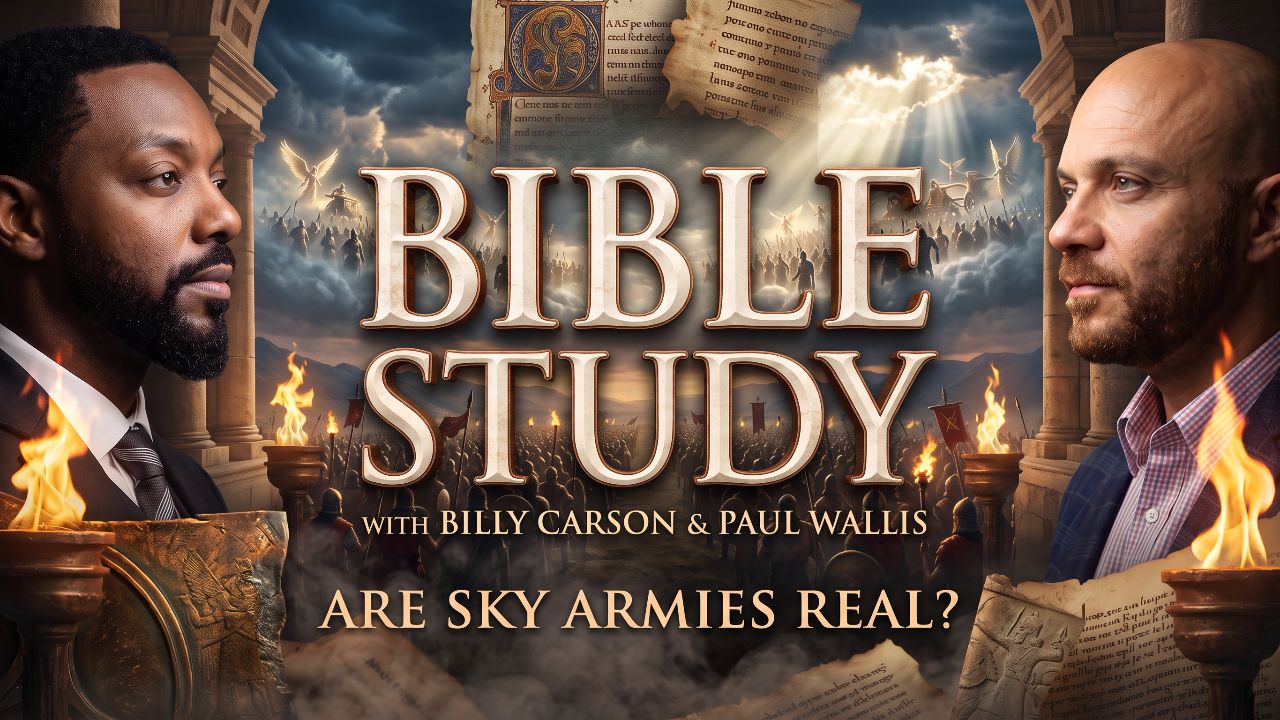
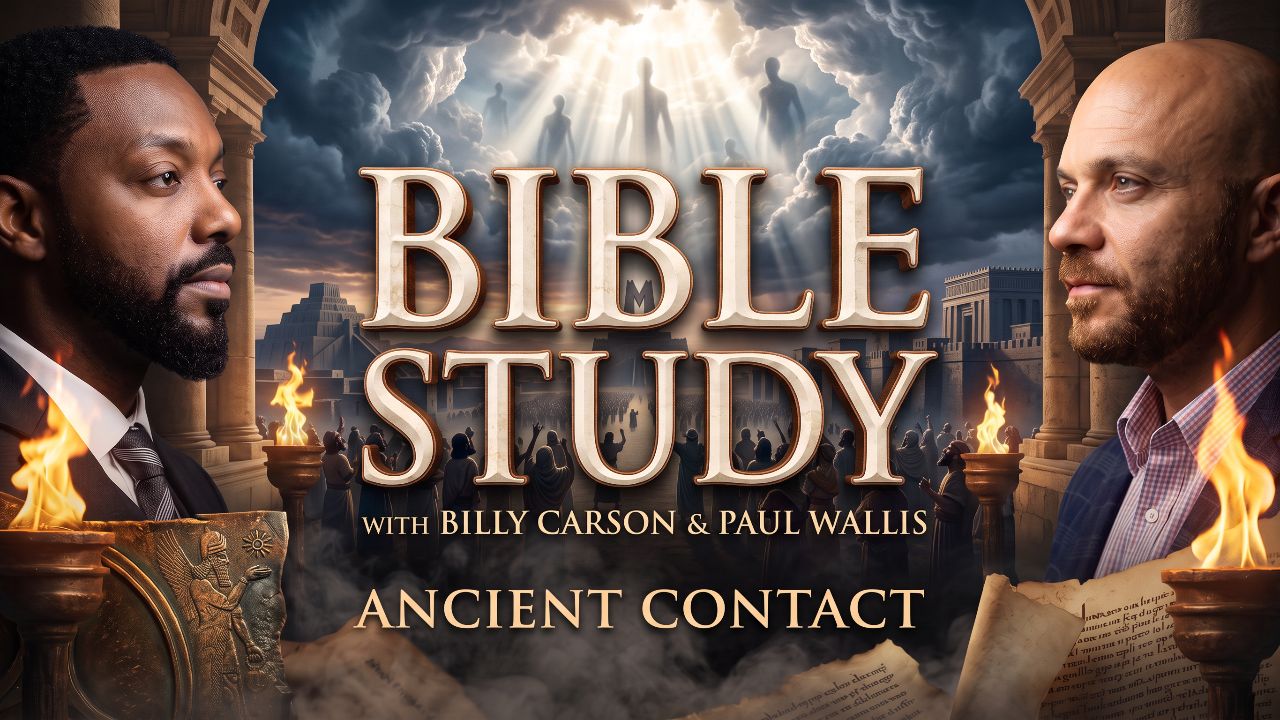
Mainstream scholars accept that Enoch and Jubilees were valued at Qumran and later fell outside most canons, but generally explain that through the slow, contested process of canon formation rather than deliberate suppression. Carson's reading pushes further and asks what the excluded texts were describing. He works through this ground in the [Bible Study series on 4BK TV](/watch/bible-study), where he reads the canonical books alongside the texts that did not make it in.
Watch, read and go deeper
Start with the [Bible Study series](/watch/bible-study) on 4BK TV, then browse [the Best of Billy Carson](/watch/best-of-billy-carson) for his most-watched talks on ancient texts and hidden history. If the Enoch material is what drew you in, continue with our full explainer on [the Book of Enoch](/the-book-of-enoch-explained-the-watchers-nephilim-and-why-it-was-left-out). For the bigger questions about mind, spirit and the sacred traditions these texts belong to, explore [the consciousness topic hub](/topics/consciousness).
Frequently asked questions
How old are the Dead Sea Scrolls?
The scrolls date from roughly 250 BCE to 68 CE. Those dates come from handwriting analysis and radiocarbon tests, which broadly agree. The latest date corresponds to the Roman destruction of the Qumran settlement during the First Jewish Revolt.
Do the Dead Sea Scrolls mention Jesus?
No. None of the scrolls mentions Jesus, John the Baptist or any figure from the New Testament, and there are no Christian texts in the collection. They are Jewish writings, most copied before Jesus was born.
Is the Book of Enoch in the Dead Sea Scrolls?
Yes. Fragments of 1 Enoch in Aramaic were found in Cave 4, covering parts of every section of the book except the Parables (chapters 37 to 71). They show that the book, including its account of the Watchers, was circulating in Judea well before the Christian era.
Where are the Dead Sea Scrolls kept today?
Most are in Israel: the major Cave 1 scrolls at the Shrine of the Book in the Israel Museum, and most fragments with the Israel Antiquities Authority. The Copper Scroll and some other pieces are in the Jordan Museum in Amman.
Did the Vatican hide the Dead Sea Scrolls?
No. The scrolls were never kept at the Vatican; they are held in Israel and Jordan, and the editorial team included scholars of several faiths and none. The long publication delay came from a small academic team's exclusive rights, which ended in 1991.
Sources and further reading
- Geza Vermes, The Complete Dead Sea Scrolls in English (Penguin Classics)
- James C. VanderKam, The Dead Sea Scrolls Today (Eerdmans, second edition)
- James C. VanderKam and Peter Flint, The Meaning of the Dead Sea Scrolls (HarperSanFrancisco, 2002)
- Discoveries in the Judaean Desert, 40 volumes (Oxford: Clarendon Press, 1955–2009)
- J. T. Milik, The Books of Enoch: Aramaic Fragments of Qumrân Cave 4 (Oxford, 1976)
- Norman Golb, Who Wrote the Dead Sea Scrolls? The Search for the Secret of Qumran (Scribner, 1995)
- Josephus, The Jewish War, book 2; Pliny the Elder, Natural History, book 5
- The Leon Levy Dead Sea Scrolls Digital Library, Israel Antiquities Authority