Gunung Padang is a megalithic terraced site on the summit of an extinct volcanic hill in West Java, Indonesia, built from natural andesite columns that people quarried and arranged into five terraces. Archaeologists date its construction to the last few thousand years. A 2023 paper claiming it was a buried pyramid begun as much as 27,000 years ago was retracted by its journal in March 2024 after the publisher found the radiocarbon dates came from soil with no link to human activity.
The site matters because it has become a test case. It sits at the centre of the lost-civilization debate popularised by Graham Hancock, it briefly carried the label "world's oldest pyramid" in headlines around the world, and the way that claim rose and fell shows exactly how dating evidence works and where it can go wrong. Readers who want to weigh the idea of an advanced Ice Age culture need to know what was actually found on that hill, and what was not.
What is Gunung Padang
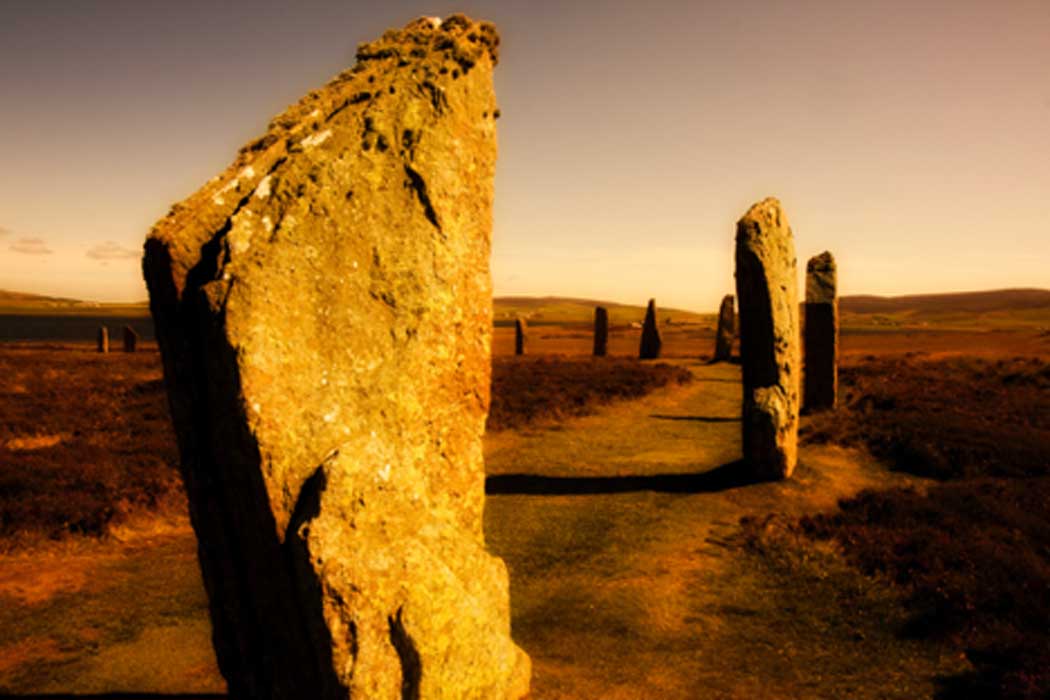
Gunung Padang is a terraced stone sanctuary near the village of Karyamukti, about 50 km southwest of Cianjur in West Java, sitting roughly 885 m above sea level. The hill beneath it is the remains of an extinct volcano, and the rock at its summit is andesite that cooled into long, many-sided columns, a natural process geologists call columnar jointing. Those ready-made columns, typically one to three metres long, are the building material of the site.
People stacked, laid and stood the columns to build five terraces aligned roughly northwest to southeast along a central axis, each bordered by retaining walls and growing smaller as the hill rises. A steep stairway of about 370 andesite steps climbs from the base to the first terrace. The terraces are scattered with columns standing upright, lying in rows and grouped into small enclosures, which gives the summit its distinctive look.
The Sundanese people of the area regard the site as sacred, and it remains a place of spiritual significance as well as a visitor attraction.
Who found it and how it was recorded
Gunung Padang entered the written record in the Dutch colonial period. Rogier Verbeek described it in his 1891 inventory of Javanese antiquities, Oudheden van Java, based on a visit made in 1890, and Nicolaas Johannes Krom included similar notes in a 1914 report of the Dutch archaeological service.
After that, the site faded from official attention until local farmers came across it again in 1979. Indonesian archaeologists began surveying and restoring it, the Ministry of Education and Culture declared it a heritage site of local importance in 1998, and in 2014 it was designated a National Site Area covering 29 hectares.
That timeline is important for one reason: Gunung Padang was never hidden. It was a known, visible monument for more than a century before the pyramid claim arrived, and archaeologists had already excavated it and published on it.
What archaeologists think it was
Most Indonesian archaeologists interpret Gunung Padang as a punden berundak, a stepped terrace sanctuary of a type known from the Indonesian megalithic tradition, built on top of a natural hill rather than as a free-standing pile. Lutfi Yondri, who has excavated the site and published a study of it under that name in 2014, places construction in roughly the 2nd to 5th centuries CE, while archaeologist Harry Truman Simanjuntak has suggested the 6th to 8th centuries CE.
The physical evidence fits that range. Pottery fragments recovered at the site were dated by Indonesia's archaeology bureau to about 45 BCE to 22 CE, and Yondri has pointed to charcoal found in archaeological contexts directly tied to the architecture, which puts the monument at roughly 2,000 years old. Those are the kinds of samples that date a building: material left by people, found in layers connected to the structure itself.
None of this makes Gunung Padang a small or ordinary site. It is among the largest megalithic complexes in Southeast Asia, and how its builders organised the labour, why they chose this hill and what rituals took place on the terraces are open and worthwhile questions. For how it compares with stepped and pyramid-shaped monuments elsewhere, see pyramids around the world.
Where the 27,000-year pyramid claim came from
The pyramid claim comes from Indonesian geologist Danny Hilman Natawidjaja and colleagues, who argued for more than a decade that the hill itself is not natural but a vast, layered human construction with the visible terraces as only its final phase. Their work drew international attention when Graham Hancock made Gunung Padang the subject of the opening episode of the Netflix series Ancient Apocalypse, released in November 2022.
In October 2023 the team published "Geo-archaeological prospecting of Gunung Padang buried prehistoric pyramid in West Java, Indonesia" in Archaeological Prospection, a peer-reviewed journal published by Wiley. The paper combined core drilling, trenching, ground-penetrating radar, electrical resistivity tomography and seismic tomography to map layers inside the hill, and it reported radiocarbon dates from soil recovered in the drill cores.
On that basis the authors described a sequence of construction stages: a lava core they said had been sculpted, an earliest building phase they placed at roughly 27,000 to 16,000 years ago, a second phase around 8,000 to 7,500 years ago, and the visible terraces around 4,000 to 3,100 years ago. If correct, that would have made Gunung Padang far older than any known monumental building, and headlines quickly called it the world's oldest pyramid.
Why the paper was retracted
Wiley and the journal's co-editors-in-chief retracted the paper in March 2024, in a notice dated 18 March 2024, after third-party experts in geophysics, archaeology and radiocarbon dating raised concerns. The investigation concluded the paper contained a major error that peer review had missed: "the radiocarbon dating was applied to soil samples that were not associated with any artifacts or features" that could reliably be interpreted as made by people.
Because the dates did not belong to anything human, the notice concluded that the interpretation of the site as an ancient pyramid built 9,000 or more years ago was incorrect, and that the article had to be retracted. The notice also recorded that all the authors disagreed with the decision.
Natawidjaja responded that he and his colleagues were "baffled" and that Wiley had not given them sufficient evidence for the alleged error, describing the move as an "unjust retraction of groundbreaking research." That is the authors' position. The journal's finding is that the dating did not support the conclusion; the notice describes an error of interpretation, not misconduct, and nothing in the record suggests fabricated data.
Archaeologists who had criticised the paper from the start welcomed the retraction. Flint Dibble of Cardiff University said the paper's headline conclusions did not "really match any of the actual evidence presented in the body of the paper," and argued that the geophysical data themselves could be legitimate while the leap to a buried Ice Age pyramid was not justified. Bill Farley of Southern Connecticut State University noted that the oldest soil samples carried none of the usual traces of human activity, such as charcoal or bone.
What radiocarbon dating can and cannot tell you
Radiocarbon dating tells you when the organism that produced a piece of carbon died. It does not tell you when a wall was built unless that carbon is securely tied to the act of building, such as charcoal from a hearth sealed under a floor or a seed trapped in mortar.
Soil inside a hill can contain organic matter that is thousands or tens of thousands of years old simply because hills are old. Dating that soil gives you the age of the soil, not the age of anything people did. A widely shared comparison from the Southeast Asian Archaeology blog made the point with the Eiffel Tower: dating the ground beneath it would tell you about the ground, not about the 1880s ironwork above it.
That is the core problem the retraction notice identified. The deep layers produced no tools, no hearths, no human remains and no secure building features. The one object the authors highlighted, a dagger-shaped stone, has not been shown to have been worked by human hands. Geologists have also argued that the layers and voids inside the hill can be explained by the volcanic origin of the rock and by natural movement of the columns over time.
How Gunung Padang compares with the oldest verified monuments
The oldest monumental site that archaeologists can securely date is Göbekli Tepe in southeastern Turkey, where hunter-gatherers raised carved stone pillars around 9500 BCE. Its dates come from material left by the builders inside the enclosures, which is exactly the kind of evidence missing from the deep layers of Gunung Padang.
The wider record shows monumental building appearing after the end of the last Ice Age, about 11,700 years ago, and spreading over the following millennia. The ancient civilizations timeline lays that sequence out and shows where the lost-civilization argument sits within it. Lutfi Yondri has also pointed out that people in the Gunung Padang region were living in caves between roughly 12,000 and 6,000 years ago, after the supposed first pyramid phase, with no sign of advanced stonemasonry in that period.
The question behind the pyramid claim, whether a catastrophe at the end of the Ice Age erased an earlier civilization, is usually tied to the Younger Dryas impact hypothesis, which remains disputed among earth scientists on its own terms. Gunung Padang was offered as physical proof of that lost world; with the retraction, it no longer serves as that proof.
Billy Carson's reading
Billy Carson has not published a position of his own on Gunung Padang. The site comes up on his 4BK TV series Anunnaki Ancient Secrets Revealed, in Episode 6, an interview with Erich von Däniken, the author of Chariots of the Gods. In that episode it is von Däniken, not Carson, who reflects on Gunung Padang alongside Easter Island and other sites as part of his broader case that early humans received knowledge from visitors.
Carson's own work on deep human origins runs through the Sumerian material, the Anunnaki and the question of how much older civilization may be than textbooks allow. Readers who want that framework can start with the Anunnaki topic hub and the companion piece on ancient astronaut theory, which sets out where the idea came from and the main criticisms of it. Whatever view a reader takes of those larger questions, Gunung Padang's case is best judged on its own evidence: a real, impressive terraced sanctuary, and an extraordinary age claim that its own journal withdrew.
Watch, read and go deeper
Episode 6 of Anunnaki Ancient Secrets Revealed on 4BK TV carries Erich von Däniken's discussion of Gunung Padang and other sites in his own words. For more on Indonesia's archaeological past, the 4biddenknowledge archive covers the gold finds from the Musi River linked to the Srivijaya kingdom in Indonesia's long-lost Island of Gold. The Anunnaki topic hub gathers Billy Carson's articles, episodes and talks on human origins, and the Göbekli Tepe and timeline companions give the verified baseline for how old monumental building really is.
Frequently asked questions
Is Gunung Padang the oldest pyramid in the world
No. The paper that made that claim was retracted in March 2024 because its radiocarbon dates came from soil not associated with any artifacts or human-made features. Archaeological evidence from the site points to construction within roughly the last 2,000 years, and the oldest securely dated monumental site remains Göbekli Tepe in Turkey.
How old is Gunung Padang
Archaeologists who have excavated it place the terraces between about the first centuries BCE and CE and the 8th century CE, with proposals ranging from the 2nd to 5th centuries CE to the 6th to 8th centuries CE. Pottery from the site has been dated to about 45 BCE to 22 CE. The hill itself is far older, because it is a volcanic formation.
Why was the Gunung Padang paper retracted
The publisher, Wiley, and the journal's editors found that the paper dated soil samples that had no connection to artifacts or features made by people, and that this error had not been caught in peer review. They concluded the pyramid interpretation was incorrect. The authors disagreed with the retraction.
Is Gunung Padang man-made
The terraces, walls, stairway and arrangements of stone on the summit are man-made, built from natural andesite columns. The hill underneath is a natural volcanic formation. The claim that the whole hill is a buried, layered human construction is the part that has not been supported by the evidence.
Can you visit Gunung Padang
Yes. The site is open to visitors and is usually reached by road via the town of Cianjur in West Java. It is a protected National Site Area and is still treated as a sacred place by local Sundanese communities, so visitors are expected to behave respectfully on the terraces.
Sources and further reading
- Danny Hilman Natawidjaja et al., "Geo-archaeological prospecting of Gunung Padang buried prehistoric pyramid in West Java, Indonesia", Archaeological Prospection (Wiley), 2023, and the retraction notice of March 2024
- Retraction Watch, "Controversial pyramid paper retracted when authors turn out to have radiocarbon-dated nearby dirt", 20 March 2024
- Times Higher Education, "Paper claiming 'world's oldest pyramid' retracted over 'error'", March 2024
- Scientific American, "Experts Doubt Claims that World's Oldest Pyramid Was Discovered in Indonesia", 2023
- Lutfi Yondri, Punden Berundak Gunung Padang: Refleksi Adaptasi Lingkungan dari Masyarakat Megalitik, 2014
- Rogier Verbeek, Oudheden van Java, 1891
- Graham Hancock, Ancient Apocalypse, Netflix, 2022