By: April Carson
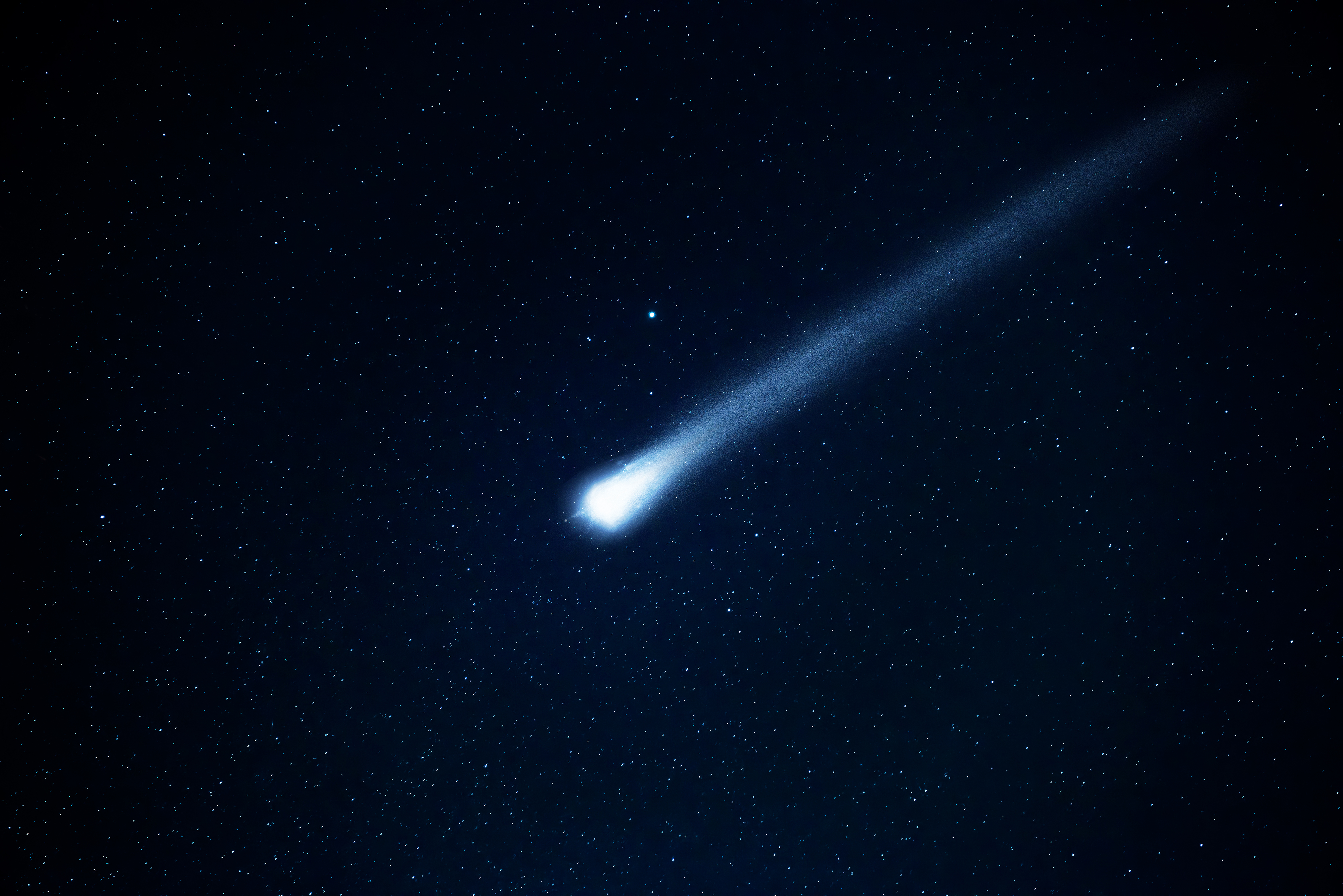
It appears that space saved the best for last in 2021, as the re-discovery of Comet Leonard will be one of the most apparent events this year.
The comet, discovered by Greg Leonard, a senior researcher at the University of Arizona's Mount Lemmon Observatory, was first spotted at the facility outside of Tucson, Arizona, on Jan. 3.
The comet will be "the brightest this year" according to Robert Lunsford with the American Meteor Society, although it won't be the most spectacular one ever. People across the country may now already begin to find it in the sky with binoculars and telescopes, and it won't be long before people can view the comet with their naked eyes for this once-in-a-lifetime event.
What makes comet Leonard special?
Despite its recent discovery, the comet won't be around for long. Gianluca Masi, an astrophysicist and founder of The Virtual Telescope Project, explained that Leonard is a long-period comet, which means it does not return often. In reality, the comet hasn't passed by Earth in over 70,000 years, and after it passes by the sun, it will be ejected from our solar system and never seen again.
"This makes the observation of this comet even more fascinating, since we'll be saying goodbye to this icy, little world," Masi added.
Masi explained that comets are unpredictable, and they may alter their trajectories at any time, making them more or less visible. However, if Leonard maintains his progress, Lunsford estimates that it will be a magnitude of four, which is comparable to typical stars.
When, and how, can you see it?
Anyone on the planet, according to Lunsford, can see the comet right now unless you live in Antarctica. The comet may be seen with binoculars or a telescope starting Dec. 13. The planet will be 21.7 million miles away from Earth on Dec 12, the closest it will come to our planet. You'll have a better chance of seeing it if you're able to avoid light pollution.
"It's going down with each passing morning," Lunsford added. "You might be able to follow the comet's tail."
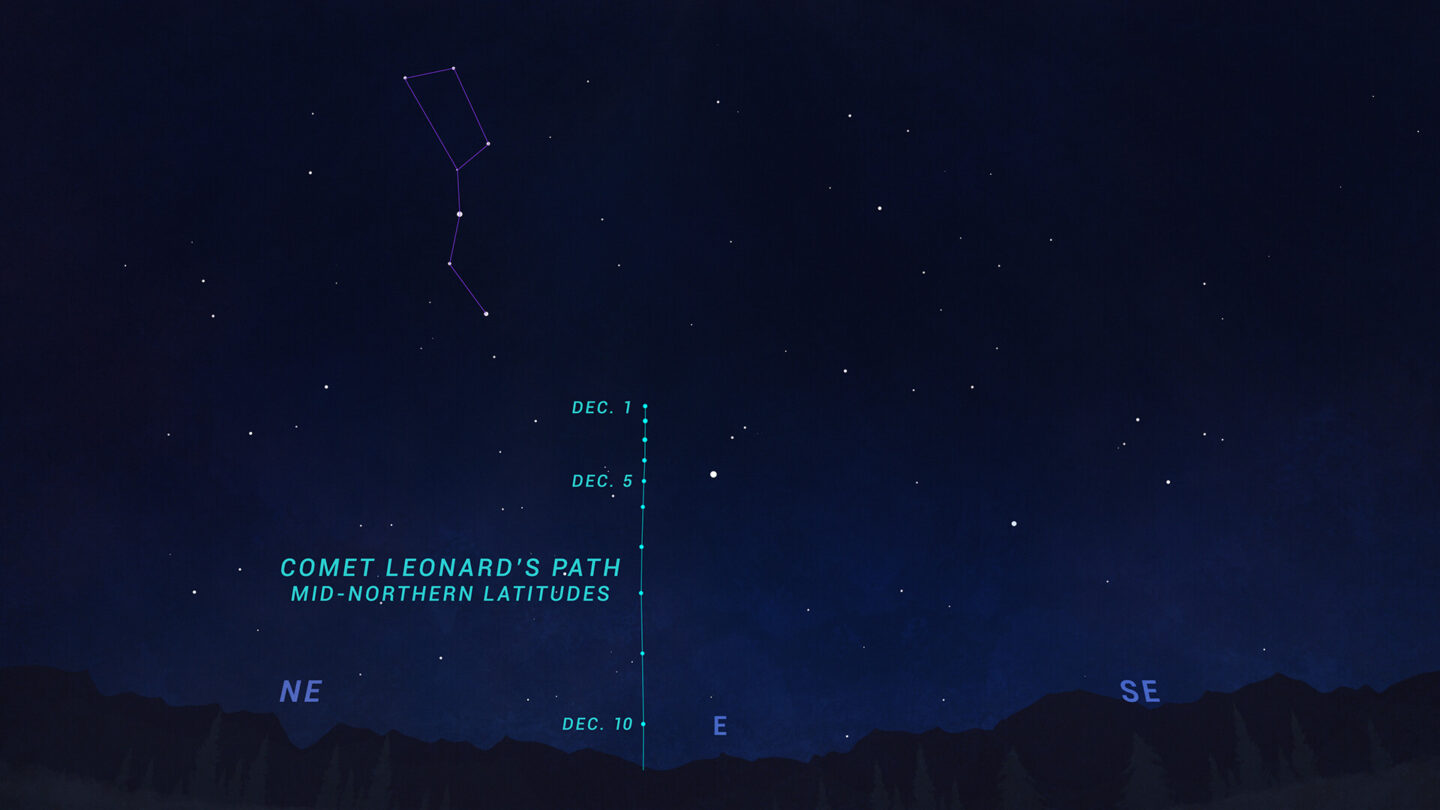
On Dec. 3, the comet was visible beside the global cluster of stars, Messier 3, according to Masi. On Dec. 6, it appeared left of Arcturus, one of the most brilliant stars viewed from Earth and a "bright, orange star you can't miss," according to Lunsford.
The comet will be viewable in the night sky beginning on Dec. 14, and no instruments will be required for a few days. Lunsford said the comet would appear adjacent to Venus, and people would notice it between the horizon and Venus at sunset on Dec. 17. At 2:26 a.m. on December 18, Leonard will be 2.6 million miles from Venus.
It will gradually fade from view in the night sky, but people will be able to see it with instruments all the way until Christmas.
Decoders of The Truth With Rex Bear, Billy Carson, Matthew LaCroix & Jay Campbell

-------------------
LOOKING TO INVEST IN 4BIDDENKNOWLEDGE? CLICK HERE TO MAKE A CONTRIBUTION AND GET INVOLVED WITH 4BIDDENKNOWLEDGE TV AND BECOME PART OF THE MOVEMENT!
CLICK THE LINK TO INVEST
**
GET YOUR BOOK TODAY!